
Introduction
Modern-day women often face several health challenges due to changing lifestyles, increased stress levels, irregular eating habits, lack of physical activity, and environmental influences. One of the most commonly diagnosed hormonal disorders affecting women of reproductive age today is Polycystic Ovarian Disease (PCOD).
PCOD is not merely a menstrual disorder; it is a complex condition involving hormonal imbalance, metabolic disturbances, irregular ovulation, and often changes in skin, hair, body weight, and emotional well-being. According to various global health estimates, disorders related to polycystic ovaries affect a significant proportion of women during their reproductive years, making awareness and early lifestyle management extremely important.
While modern medicine focuses on symptom management and medical treatment based on individual needs, Ayurveda offers a broader wellness perspective that emphasizes balanced nutrition, healthy digestion, daily routine, stress management, physical activity, and individualized care.
Many women today search for a holistic and sustainable approach to How to Manage PCOD Naturally A balanced strategy combining medical guidance, lifestyle improvements, appropriate nutrition, exercise, and an Ayurvedic Treatment for PCOD approach may help support overall hormonal wellness and improve quality of life
What is PCOD?
Polycystic Ovarian Disease (PCOD) is a condition in which the ovaries may produce immature or partially mature eggs that can develop into small cyst-like follicles. These changes are often associated with hormonal disturbances, particularly involving androgen (male-type hormone) levels, insulin metabolism, and ovulatory function.
Women with PCOD may experience irregular menstrual cycles, difficulty with weight management, acne, excessive hair growth, and challenges related to fertility.
Understanding the condition early and following a comprehensive <u>PCOD Treatment</u> strategy involving medical advice, diet, exercise, and lifestyle management can help women better manage their symptoms.
PCOD vs PCOS: Understanding the Difference
| Feature | PCOD | PCOS |
|---|---|---|
| Full Form | Polycystic Ovarian Disease | Polycystic Ovary Syndrome |
| Nature | Ovarian condition involving immature follicles | Complex hormonal and metabolic syndrome |
| Ovulation | May occur irregularly | Often significantly disturbed |
| Hormonal Disturbance | Usually milder | May be more pronounced |
| Insulin Resistance | Can be present | More commonly associated |
| Fertility Impact | May affect conception in some women | More commonly associated with ovulatory infertility |
| Management | Diet, exercise, lifestyle, and medical guidance | Comprehensive medical and lifestyle management |
Common Symptoms of PCOD
The symptoms of PCOD can vary from one woman to another. Some women experience only irregular periods, while others may have multiple physical and metabolic symptoms.
Most Common Symptoms of PCOD
🩸 Irregular or missed periods
⚖️ Unexplained weight gain
🌿 Acne and oily skin
🧔 Excess facial or body hair (Hirsutism)
💇 Hair thinning or increased hair fall
😟 Mood changes and emotional stress
👶 Difficulty conceiving
🌑 Dark patches or skin pigmentation (especially around the neck or underarms)
Understanding these PCOD Symptoms early and seeking timely professional guidance can help women adopt suitable lifestyle changes and prevent the worsening of metabolic disturbances.
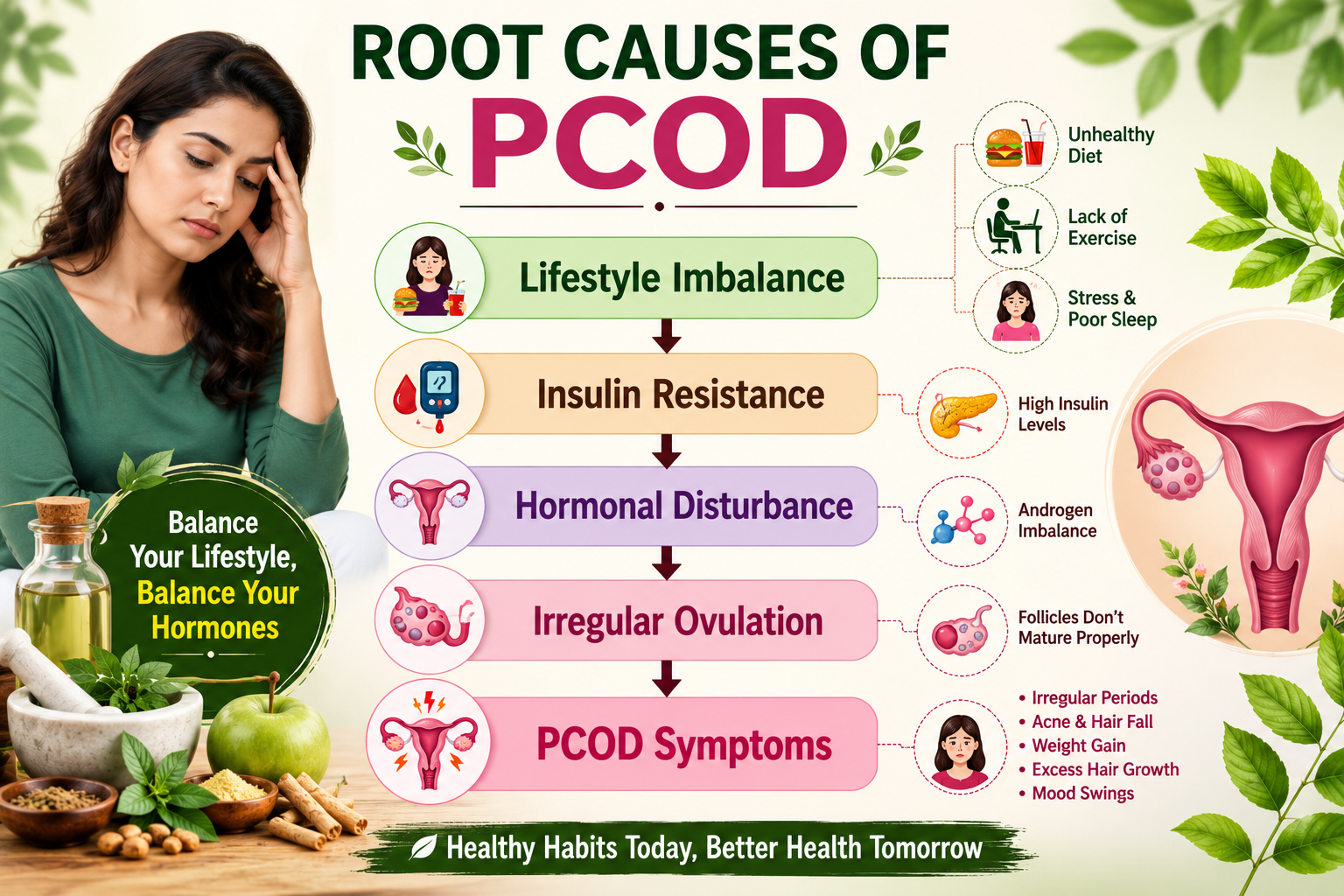
What Causes PCOD?
There is no single cause of PCOD. It usually develops due to a combination of genetic, hormonal, metabolic, and lifestyle factors.
Major Factors Associated with PCOD
1. Hormonal Imbalance
One of the key factors involved in PCOD is hormonal imbalance. Increased androgen levels may contribute to acne, excessive hair growth, and irregular menstrual cycles.
Understanding and managing PCOD Hormonal Imbalance through proper medical evaluation, balanced nutrition, exercise, and healthy routines is an important aspect of long-term wellness.
2. Insulin Resistance
Many women with PCOD experience insulin resistance, where body cells do not respond effectively to insulin. This may lead to higher insulin levels, which can influence hormonal pathways and ovarian function.
Insulin resistance is also closely linked with Weight Loss for PCOD strategies, as maintaining a healthy body weight may improve metabolic and hormonal health.
3. Unhealthy Dietary Patterns
Regular consumption of highly processed foods, excess refined carbohydrates, sugary beverages, and unhealthy fats may contribute to metabolic imbalance.
Following a balanced PCOD Diet Plan rich in fiber, protein, healthy fats, and nutrient-dense foods may support overall wellness.
4. Sedentary Lifestyle
Lack of physical activity can contribute to weight gain, poor metabolic health, and worsening insulin resistance.
Regular exercise, strength training, walking, and Yoga for PCOD may support better physical and emotional well-being.
5. Chronic Stress
Long-term stress can affect sleep quality, appetite, lifestyle habits, and hormonal regulation. Stress management techniques such as meditation, breathing exercises, and mindfulness can be valuable components of a holistic approach.
6. Genetic Predisposition
Women with a family history of PCOD or PCOS may have a higher tendency to develop similar hormonal and metabolic patterns.
Root Causes of PCOD
Ayurvedic Perspective of PCOD
Ayurveda, the traditional Indian system of wellness, does not describe PCOD using the same modern medical terminology. However, Ayurvedic principles consider menstrual irregularities and reproductive health concerns through the broader understanding of body balance, digestive strength (Agni), metabolism, lifestyle habits, and overall well-being.
The Ayurvedic approach does not focus only on individual symptoms but aims to promote harmony among diet, routine, physical activity, mental wellness, and natural body functions.
A holistic Natural Treatment for PCOD approach through Ayurveda may include:
- Personalized dietary guidance
- Lifestyle modifications
- Stress management techniques
- Yoga and breathing practices
- Traditional herbs used to support women’s wellness
- Regular monitoring and professional consultation
It is important to understand that Ayurveda should be used responsibly and ideally alongside appropriate medical evaluation, especially in cases involving fertility concerns, severe hormonal disturbances, or other health conditions.
Conclusion
PCOD is a complex hormonal condition that affects not only reproductive health but also metabolism, emotional well-being, skin health, and overall quality of life. While its symptoms can be challenging, the good news is that consistent lifestyle changes and holistic wellness practices can play a significant role in managing the condition effectively.
The Ayurvedic approach to PCOD focuses on restoring balance within the body rather than merely addressing symptoms. Through mindful nutrition, regular physical activity, stress management, healthy daily routines, and the use of traditional Ayurvedic principles under professional guidance, women can work toward improved hormonal harmony and overall wellness.